


English

At Platt Bridge, our English curriculum is designed to ignite a passion for language and literature in every child. We believe that strong communication skills are the foundation for success, which is why we place a huge emphasis on developing high-quality spoken and written language. From the moment our pupils begin their journey with us, they are immersed in a language-rich environment where reading is at the heart of everything we do. We use high-quality texts to spark imagination and curiosity, helping children become confident and fluent readers who love to explore different genres and stories. Our unique writing process, inspired by leading educational research, empowers pupils to plan, draft, and refine their work until they are proud of their final pieces, giving them the skills and confidence to communicate effectively for any purpose.
We use the Read Write Inc. program to teach phonics to our students. This systematic and synthetic phonics approach provides a structured and consistent method for learning to read and spell, ensuring that children quickly acquire the foundational skills necessary for literacy success.
Early Reading and Phonics
At Platt Bridge Community School, we are committed to ensuring that every child becomes a confident, fluent reader. To achieve this, we use Read Write Inc. (RWI), a nationally recognised synthetic phonics programme developed by Ruth Miskin. We chose this scheme because of its proven track record in rapidly developing children’s decoding, spelling, and writing skills. By breaking the English language down into its core sounds, RWI provides children with a structured, step-by-step toolkit for success. We believe in early success, which is why our phonics programme commences in the summer term of Nursery. This consistency continues through Reception and Key Stage 1, allowing our staff to closely monitor each child’s development and provide a stable, familiar framework for their literacy journey. Our goal is to transform our pupils into passionate readers who don’t just “decode” words, but truly comprehend and enjoy the stories they read.
How Read Write Inc. Benefits Our Pupils
- Tailored Learning: Children are assessed each half term and grouped by their phonetic knowledge rather than their age. This ensures that every child is taught at a pace that is “just right”—offering support where needed and a challenge for those moving ahead.
- Building Confidence: We use “decodable” books that are matched exactly to the sounds your child has learned in class. This means children experience immediate success, building a genuine love for reading from their very first book.
- Engagement and Interaction: The lessons are lively and interactive, using techniques like “Fred Talk” to help children blend sounds into words and “Partner Talk” to encourage oral language development.
- Consistency: The RWI approach provides a uniform language for literacy across the school, creating a familiar environment where children feel secure and empowered to take risks with their learning.
Children learn sounds in three sets. Set 1 covers initial letter sounds, while Sets 2 and 3 introduce digraphs and trigraphs (multiple letters making one sound, like ay or igh).



Decoding & Blending:
We use “Nonsense Words” (Alien Words) to test pure decoding skills. This ensures children are applying their phonetic knowledge rather than relying on memory—a key skill for the Year 1 Phonics Screening Check.
Handwriting:
Letter formation is taught using mnemonic phrases, such as “around the apple and down the leaf” for the letter ‘a’, to help children internalise correct movements.
Assessment and Progress
Pupils are assessed regularly to ensure they are in the correct ability group. In Year 1, children complete weekly quizzes and sit the statutory Phonics Screening Check at the end of the year to measure their progress against national standards.
Useful Links for Parents
Maths
At Platt Bridge Community School, we aim to inspire a passion for mathematics in every child. We want our pupils to develop the essential skills and knowledge to make sense of the world and to prepare them for their future. Our curriculum focuses on the three core aims of the National Curriculum: fluency, reasoning, and problem-solving. Through varied and frequent practice, we help children build a strong understanding of numbers and procedures. We also encourage them to think mathematically, explain their ideas, and apply their skills to solve a wide range of problems. By using a mastery approach and the highly-regarded White Rose Maths schemes of work, we ensure that every pupil gains a deep, long-term understanding of each concept, setting them up for success throughout their education and beyond.

At Platt Bridge, we follow the highly respected White Rose Maths schemes of work, a mastery approach that ensures our pupils gain a deep and secure understanding of mathematical concepts. In addition, our youngest learners in EYFS and Key Stage 1 benefit from the NCETM Mastering Number programme, which provides short, daily sessions to build a solid foundation in number sense and fluency. This combination of a comprehensive mastery curriculum and targeted, evidence-based number practice gives our pupils the strong skills and confidence they need to become flexible, confident mathematicians.
Science
Teachers use science to explain the events of the world around them through exciting lessons that spark pupils’ curiosity about phenomena. Our science curriculum allows all pupils to obtain the knowledge and learn through varied systematic investigations needed to help them think like a scientist; to develop an understanding of scientific processes; and ask and answer scientific questions leading them to be equipped with skills for life to understand the world around them. At Platt Bridge Community school, we strongly believe that all children are entitled to an extensive and well-balanced science education. They should develop a love for science and be aware of how science is relevant today.

Art
Our Art curriculum at Platt Bridge Community School is designed to empower every child to think like an artist and create pieces they genuinely feel proud of. From the earliest stages, we cultivate a deep appreciation for artistic expression and develop foundational skills through a progressive and engaging journey.
In Early Years, children begin their artistic exploration by discovering the fundamental elements of art. They are introduced to various artists, freely experimenting with colour theory, sculpting, and a diverse range of media. This early exposure sparks creativity and builds confidence.
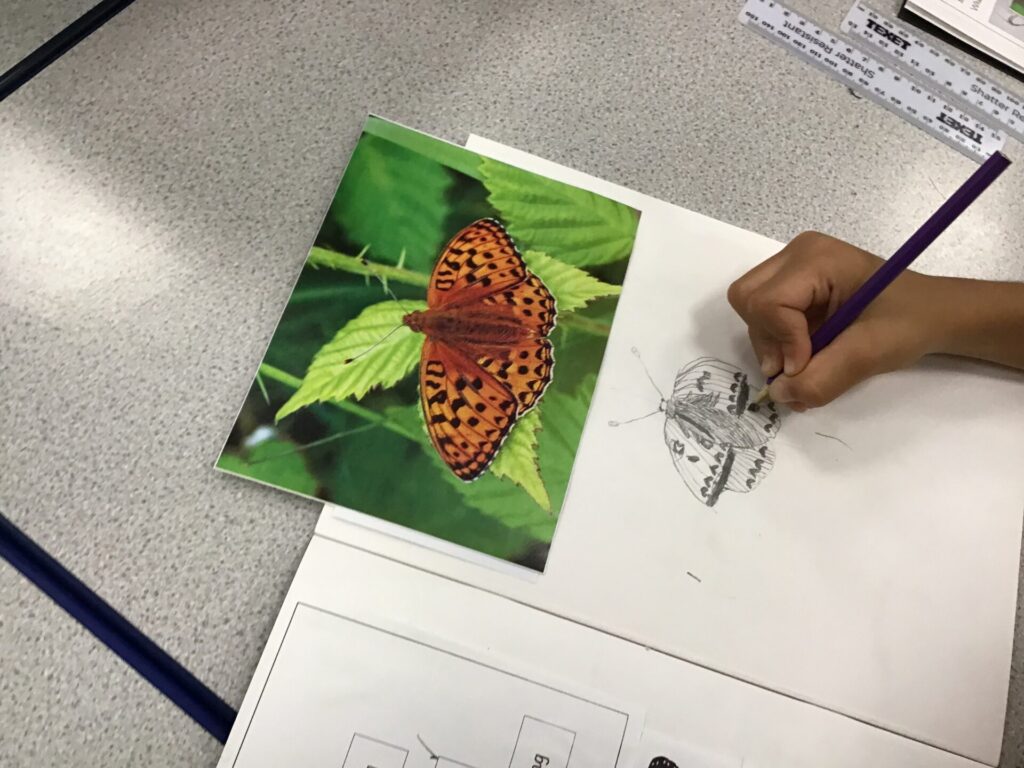
Across all year groups, our curriculum begins with a strong foundation in drawing. We dedicate specific focus to teaching the essential skills of sketching and shading, equipping children with the confidence and precision to apply these techniques in their future artistic endeavours. As the year progresses, the Spring term focuses intensively on the skills required for painting, sculpture, and collage. Children systematically build their knowledge of colour theory, artistic techniques, and different media as they move from Year 1 to Year 6. Throughout this process, there are ample opportunities for children to explore and engage with both realist and abstract forms of art, broadening their creative horizons.
While learners consistently draw inspiration from a variety of artists across all units, the Summer term is dedicated to an in-depth study into a wide range of diverse artists, such as Nick Mackman and Zeduan. Children meticulously learn about the techniques, media, and tools these artists use to create their distinctive pieces, deepening their understanding of artistic practice. The curriculum is structured to ensure that learners systematically acquire and are taught the necessary skills throughout each unit, working towards a final project at the end of each unit that showcases their acquired abilities and artistic voice.
Design & Technology
Our Design and Technology (DT) curriculum at Platt Bridge Community School is designed to inspire pupils to become innovative, resourceful, and enterprising individuals who can make a tangible difference in the world. Following the National Curriculum, our intent is to equip children with the knowledge, understanding, and skills to design, make, and evaluate a range of products, fostering their creativity and problem-solving abilities.
We aim to develop children’s practical expertise in working with various materials, tools, and components, ensuring they understand the principles of effective design and the iterative process of refinement. A core aspect of our approach is to expose children to real-world inspiration, encouraging them to research existing products and analyse them based on their intended purpose and target audience. This critical analysis of authentic designs helps children understand the practical application of DT and informs their own creative solutions. Furthermore, our curriculum introduces children to modern design methods through the application of Computer-Aided Design (CAD), preparing them for contemporary design practices.
Beyond product design, all year groups engage in dedicated cooking and nutrition units, building essential knowledge and practical skills for healthy living and future independence. We also actively promote the application of knowledge from other subjects, enabling children to make meaningful connections across the curriculum. For example, pupils will have the opportunity to apply their scientific understanding of electricity circuits to create a functional, real-world product like a working lamp.
Through engaging projects, children will learn to identify real-world needs, generate imaginative solutions, and critically appraise their own work and the work of others. Our curriculum encourages resilience, resourcefulness, and a deep understanding of how DT impacts daily life and contributes to a better society, preparing them to become confident and capable designers and innovators of the future.

Geography
Our Geography curriculum at Platt Bridge Community School is designed to foster a deep understanding of our world, from the local to the global, while following the National Curriculum. We strategically build locational knowledge, place knowledge, and understanding of human and physical geography, with fieldwork integrated into as many units as possible to provide authentic learning experiences. Our curriculum is fundamentally structured around the interconnected ideas of place, space, and environment, empowering learners to think geographically and draw meaningful connections between their immediate surroundings and broader global contexts.
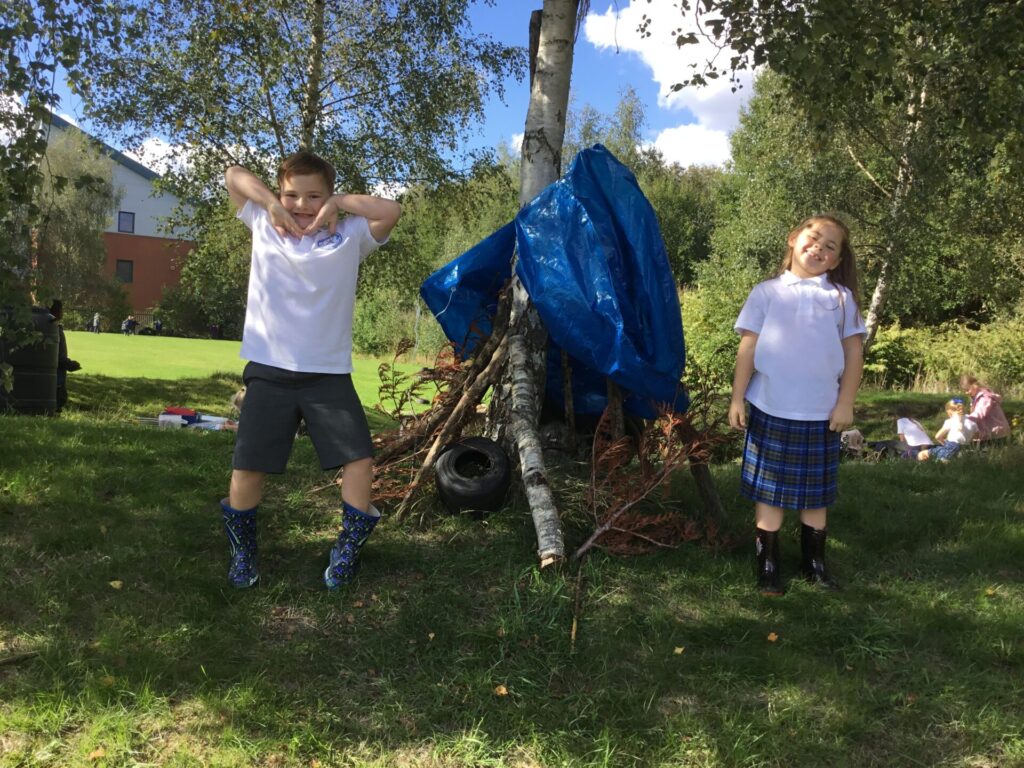
We begin by rooting learning in the local environment and immediate surroundings, enabling pupils to make concrete comparisons and links. For instance, in Reception, children explore our school, learn about directions, and investigate the local environment. In Key Stage 1, we start by examining Platt Bridge and Wigan before venturing to Blackpool. This local understanding then expands as we compare our area to other places within the UK, such as the Lake District, and to a village in Africa, helping children grasp the differences and similarities between continents.
As children progress into Lower Key Stage 2, they develop a more nuanced understanding of cities and counties, explore urbanisation, and conduct a deep dive into York to contrast its geographical features with our own local area. In Upper Key Stage 2, our studies venture further afield. We explore the biomes of Africa and China, undertaking an in-depth study of the rainforest to understand the implications of its location and associated environmental issues. In Year 6, we focus on the formation of the coast and strategies for its protection. We also investigate why London is one of the most visited cities in the world, preparing children for their real-world tourist visit and connecting their learning to practical experience.
Throughout their geographical journey, a core emphasis is placed on enquiry-based learning. We encourage children to think and act as geographers, using geographical skills to investigate, analyse, and interpret the world around them. This approach ensures children not only acquire geographical knowledge but also develop critical thinking and problem-solving skills essential for understanding our complex planet.
History
Our history curriculum at Platt Bridge is designed to ignite a lifelong curiosity about the past, ensuring children develop a deep and coherent understanding of both British and global history. Following the National Curriculum UK framework, we strategically build historical understanding by first anchoring learning in the child’s own life and living memory. This means starting with familiar concepts and local history, exploring significant figures from our area like George Formby, or delving into the lives of historical figures that still feel somewhat connected to their world, such as Queen Victoria and her coronation. This approach allows children to gain a concrete understanding of the past before we venture further back in time.

As children progress into Lower Key Stage 2 (Years 3 and 4), they journey into British pre-history, exploring the Stone Age, Bronze Age, Iron Age, Romans, Anglo-Saxons, and Vikings. During this phase, we delve into key historical concepts such as ‘Daily Life’ and ‘Rule and Power’, helping children understand how societies functioned and evolved. We culminate this period with a focused study on how ‘Crime and Punishment’ changed from the Stone Age right up to 1066, allowing for a comparative analysis across different eras.
In Upper Key Stage 2 (Years 5 and 6), our curriculum broadens its scope significantly. Children investigate the impressive achievements of ancient civilisations from around the world, such as Ancient Egypt, Greece, and the Mayans. Crucially, we encourage them to compare these global developments with what life was like in Britain at the same time, fostering a nuanced understanding of parallel histories. Year 6 then consolidates and deepens their learning with a powerful local history study focusing on the Industrial Revolution and the 1985 Miners’ Strikes, connecting national events to our community’s heritage. This is complemented by a fascinating exploration of ‘The Great Stink’ in London, a study that directly ties into their educational visit to the city, making history tangible and relevant.
Throughout their historical journey, a core focus is on developing strong historical enquiry skills. We encourage children to think like historians, actively engaging with sources and artefacts to build their own informed picture of the past. This rigorous approach ensures children not only learn historical facts but also understand the process of historical discovery and interpretation.
Computing
At Platt Bridge Community School, our computing curriculum for Key Stage 2 is designed to equip children with the foundational knowledge and practical skills necessary to thrive in an increasingly digital world. Building on the Early Years framework and following the NCCE Teach Computing curriculum, we aim to foster computational thinking and digital literacy through a rich and progressive learning journey.
We intend for our pupils to become confident, creative, and responsible users of technology who understand its power and potential. Our curriculum is structured around key areas of computing, ensuring children develop a deep understanding of:
- Computer Systems and Networks: Pupils will explore the fundamental components of digital devices, how they connect, and the vast network that is the internet. They’ll understand how information travels, the importance of cybersecurity, and the societal impact of technology, from local uses in their homes to global communication.
- Programming: Children will develop their logical reasoning and problem-solving skills through a hands-on approach to programming. Starting with sequential instructions and basic algorithms, they will progress to using concepts like repetition, selection, and variables in various programming environments, including physical computing. They will learn to design, write, and debug programs, fostering resilience and analytical thinking.
- Data and Information: Pupils will learn to collect, organise, and interpret data, understanding its significance in making informed decisions. They will explore different ways to represent data, from pictograms and branching databases to spreadsheets, appreciating how data can be used to solve real-world problems.
- Creating Media: We will empower children to be active creators, not just passive consumers, of digital content. They will gain proficiency in using a range of software and hardware to produce digital art, writing, music, animations, videos, and 3D models. This strand encourages creativity, self-expression, and an understanding of copyright and responsible media use.
- E-Safety: Woven throughout all areas of the curriculum is a strong emphasis on online safety and digital citizenship. Pupils will learn to use technology safely, respectfully, and responsibly. They will understand how to protect their personal information, recognise acceptable and unacceptable online behaviours, evaluate the reliability of online content, and know where to seek help and support when concerns arise.
By the end of KS2, our pupils will not only be proficient in using a range of software and hardware but will also have developed the critical thinking skills to adapt to new technologies, solve complex problems, and navigate the digital landscape with confidence and integrity. We aim to inspire a generation of digital innovators and responsible citizens.
At our school, we’re thrilled to be using the Teach Computing Curriculum, a high-quality and comprehensive scheme of work for computing education. This curriculum, developed by subject matter experts, ensures our students receive a robust and engaging education in computer science, information technology, and digital literacy. It’s a structured program that progressively builds skills from year to year, covering essential topics like programming, data representation, and computational thinking. By adopting this scheme, we are confident our students will develop the foundational knowledge and practical skills needed to thrive in our increasingly digital world, preparing them not just for future academic success but also for a lifetime of safe and confident technology use.
Music
At our school, we use the Charanga music scheme, enhanced by the BBC’s 10 Pieces lessons, to deliver a vibrant and comprehensive music curriculum. This approach gives our students a broad and engaging musical education, covering everything from foundational skills to exploring a wide range of musical genres and styles. To further enrich our students’ experiences, we offer a variety of exciting enrichment opportunities. These include our Wider Opportunities recorder lessons, which give all children the chance to learn an instrument, and the option for private tuition with visiting specialists, allowing students to pursue their musical passions more deeply.

Physical Education

The core intent of our Physical Education (PE) curriculum is to ensure every child develops a lifelong love for physical activity, health, and well-being. We are committed to providing a broad and balanced PE curriculum that uses a progressive, skill-based approach to build physical literacy. We achieve this by focusing on the progressive development of motor skills, coordination, and fitness, ensuring every child gains confidence in their physical abilities. To deliver this high-quality provision, we proudly use the ‘Get Set for PE’ scheme. This curriculum resource is meticulously designed to support and challenge pupils through structured, exciting lessons that focus on mastery, progression, and FUN, ensuring a comprehensive foundation in key sports and movements is established from the earliest years. Beyond physical competence, our program is expertly designed to instill vital social and emotional skills such as teamwork, resilience, respect, and the confidence to self-challenge. Ultimately, we strive for all pupils to leave primary school equipped with the essential knowledge, skills, and motivation to make informed, healthy lifestyle choices and confidently participate in a wide range of sports and activities, setting them on a path for continued well-being.
PSHE
The overarching intent of our Personal, Social, Health, and Economic Education (PSHE) curriculum is to empower every child with the knowledge, skills, and attributes they need to successfully manage life’s opportunities and challenges, becoming active, healthy, and responsible citizens.
Our programme is structured around three core themes: Health and Wellbeing, Relationships, and Living in the Wider World (including Economic Wellbeing). We aim to develop emotional intelligence and resilience by providing pupils with a safe space to explore complex social issues, understand their own feelings, and appreciate the diversity of the world around them.
Statutory Relationships and Health Education (RHE)

Integrated within our PSHE framework are the statutory subjects of Relationships Education and Health Education (RHE). Our intent for RHE is to put in place the crucial building blocks of healthy, respectful relationships, focusing on:
- Families and Friendships: Understanding diverse family structures and the characteristics of caring, positive relationships.
- Physical and Mental Wellbeing: Promoting healthy lifestyles, tackling issues of mental health, and ensuring pupils understand puberty and the changing adolescent body.
- Safety and Online Life: Equipping children with the knowledge to identify and avoid risk, particularly when navigating the internet.
Since Relationships Education and Health Education are mandatory, parents do not have the right to withdraw their child from these core RHE lessons.
While we believe in the value of providing comprehensive, age-appropriate learning, we uphold the legal requirement for parental choice regarding specific Sex Education content.
In line with statutory guidance, our PSHE curriculum’s Sex Education (SRE) component focuses only on human reproduction content that goes beyond the compulsory National Curriculum for Science (which already includes topics like life cycles, conception, and birth). Parents have the right to request that their child be withdrawn from these specific, non-statutory SRE lessons.
The full details of our PSHE curriculum, including the comprehensive content for each year group and the formal procedure for requesting withdrawal from SRE, are clearly outlined in our statutory RSE Policy, which can be accessed below.

Religious Education

At Platt Bridge Community School, Religious Education (RE) is an essential exploration of what it means to be human, grounded in the Lancashire SACRE syllabus, which we enrich through vibrant assemblies, collective worship, and visits to places of worship. Our approach goes beyond simply learning facts; it encourages a genuine investigation into the implications of religion and belief for our pupils’ personal lives, fostering the crucial qualities of kindness, empathy, and good manners as they work hard and apply themselves. We believe that understanding diverse faith systems is a vital part of living in a multi-cultural society, and this learning leads directly to tolerance and respect for others. A child leaving Platt Bridge in Year 6 understands that belief and spirituality is an individual choice, can knowledgeably discuss features of many different religions both nationally and globally, and fully appreciates the importance of empathy for people of all faiths, and none. Should you have religious reasons for wanting to withdraw your child from RE lessons, please see the Headteacher, Mr. Wallace.
Modern Languages
Our Modern Foreign Languages curriculum at Platt Bridge Community School aims to ignite a passion for language learning and an appreciation for other cultures, preparing our pupils to be global citizens. While formal MFL teaching begins in Year 3, we offer valuable enrichment opportunities for Key Stage 1 children to foster early enthusiasm and exposure to new sounds and words.
Our intent is to develop confident and capable linguists with a balanced proficiency across speaking, listening, reading, and understanding in French. The curriculum places a strong emphasis on vocabulary retrieval and regular recapping, ensuring knowledge is deeply embedded and accessible. We make learning engaging and memorable by incorporating songs and interactive activities that support acquisition and pronunciation. Pupils will build a solid foundation in French grammar and phonics, enabling them to communicate simple ideas, understand spoken and written language, and express themselves creatively.
A highlight of our MFL journey is the opportunity for Year 5 pupils to visit Paris, providing an invaluable real-world context to practice and apply their language skills in authentic situations. This immersive experience significantly enhances their confidence, cultural understanding, and motivation to continue their linguistic journey, preparing them for continued language learning in secondary school and beyond.